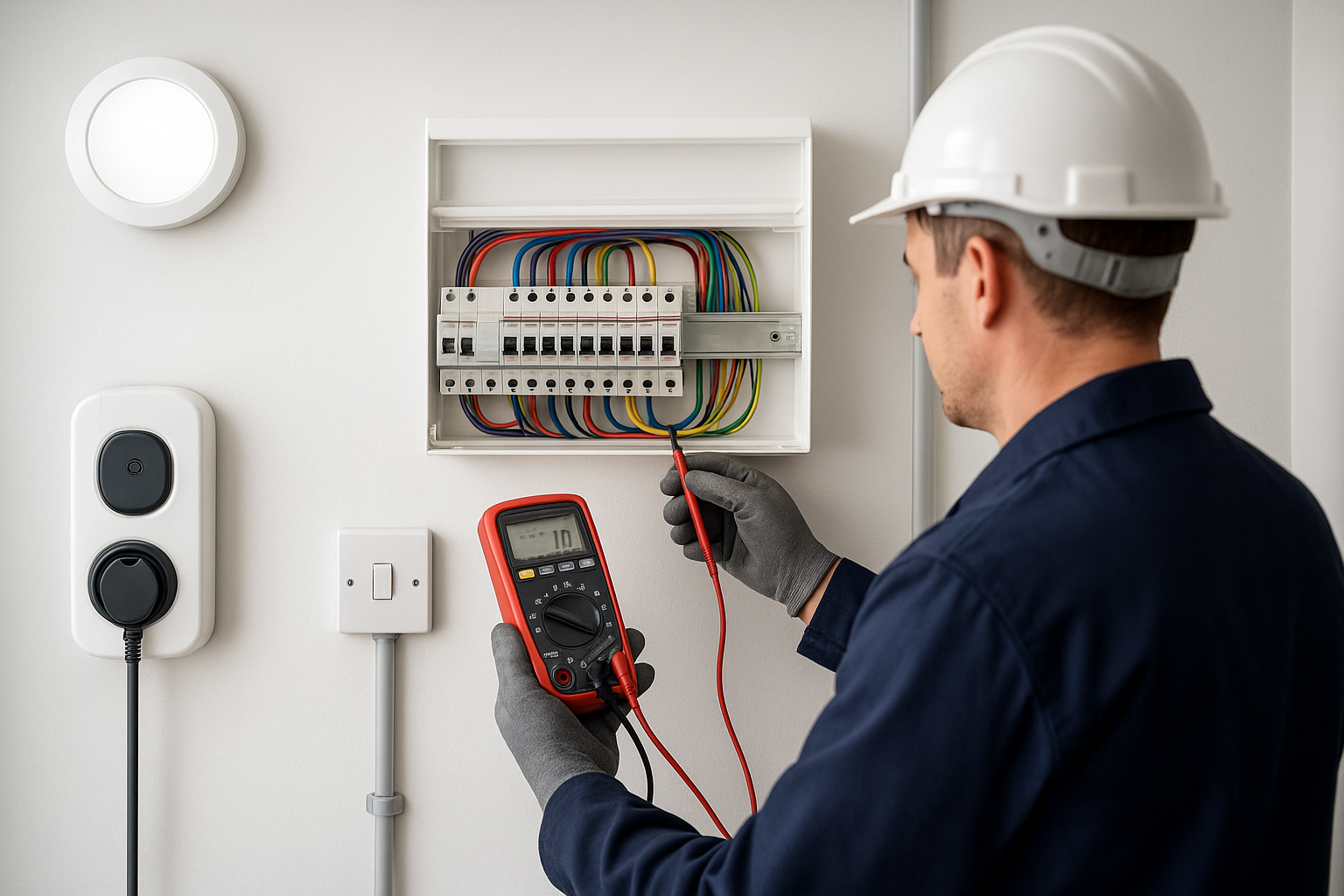
If you need rewiring in Mitcham, the priority is usually the same: make the property safer, reduce repeat faults, and get a clear plan for what needs attention now and what can wait. At Happy volt electrics, we help homeowners, landlords, property managers and builders understand whether the issue is a full house rewire, a partial and room rewire, or a targeted repair after inspection.
Rewiring is often needed when older cabling is no longer in good condition, when there is no proper earthing, when circuits keep tripping, or when a property has failed an inspection. It is also common during renovations, extensions and loft conversions, where new loads and altered layouts expose weaknesses in the existing wiring. In Mitcham, we regularly see this in Victorian terraces, converted flats, older rewires, modern flats, shops and offices around places like Mitcham Eastfields Station, Mitcham Common, Figges Marsh, Mitcham Tram Stop and Cricket Green.
Our approach is maintenance-led: we look at the condition of the wiring, the consumer unit, the circuits and the equipment already in place, then explain the options in plain English. That helps reduce repeat callouts, because the underlying problem is addressed rather than just the symptom.
Call 020 3670 3949 or email info@mitchamelectricians.co.uk to arrange a visit.
Full House Rewiring in Mitcham
A full house rewire is usually the right option when the whole electrical installation is at the end of its useful life, or when there are widespread faults across several circuits. Common signs include old rubber or fabric cabling, damaged accessories, no earthing, repeated tripping, overheating sockets, or an inspection that has highlighted multiple issues.
For many properties in Mitcham, especially older homes and long-held rentals, a full rewire can be the most practical way to bring the installation up to a safer standard. It may involve replacing the cabling, updating the consumer unit, renewing socket and lighting circuits, and checking that the layout suits how the property is used now.
We explain what is involved before work starts, including access needs, likely disruption, and how the property will be made safe during the job. If parts of the installation can remain in service, we will say so. If the safest route is to replace everything, we will explain why in straightforward terms.
Full rewires are often considered where a property has had frequent faults, where sockets and lights are on mixed-age circuits, or where the installation has not kept pace with modern demand from appliances, heating controls, home offices and kitchen equipment.
Because rewiring is safety-critical, some work may be notifiable under Part P of the Building Regulations and should be certified where required. Customers should ask for current scheme registration and insurance details before electrical work is booked.
Partial and Room Rewiring in Mitcham
Not every property needs a complete rewire. In some cases, a partial rewire or room rewire is the better option, especially where one area has been altered, damaged or repeatedly faulty while the rest of the installation remains serviceable.
This is common in homes where one room has been refurbished, a kitchen has been updated, or a converted space has been added without the rest of the property being touched. It is also useful where a specific circuit is causing nuisance tripping, where socket fronts are damaged, or where a lighting circuit needs to be reworked after alterations.
Partial rewiring can help reduce repeat callouts by addressing the exact part of the installation that is causing the problem. It is often a sensible choice for landlords and property managers who need a practical repair plan, or for homeowners who want to upgrade one area first and phase the rest later.
We will inspect the affected circuit, check how it connects to the consumer unit, and test the equipment and accessories involved. If the fault is localised, we will say so. If the issue points to wider deterioration, we will explain that too.
For properties in nearby areas such as Tooting, Colliers Wood, Morden, Streatham and Wimbledon, we often see partial rewires requested after repeated socket faults, kitchen upgrades or inspection findings.
Period Property Rewiring in Mitcham
Period property rewiring needs a careful balance between preserving the building and improving electrical safety. Older homes can have hidden wiring routes, fragile plaster, limited earthing arrangements and accessories that have been altered many times over the years. In these properties, the inspection stage matters as much as the installation work itself.
We regularly help with older homes where the wiring has been patched over time, where the cabling is no longer suitable, or where the property has been extended without a fully consistent electrical layout. Victorian terraces and older conversions often need a more considered approach so that the work is practical, safe and suited to the fabric of the building.
With period property rewiring, the aim is not only to replace unsafe wiring but also to reduce the risk of future faults. That may include checking bonding and earthing, reviewing the consumer unit, identifying circuits that are overloaded, and planning routes that make maintenance easier later on.
If a property has failed an inspection, we can help explain what the findings mean and what level of work is needed. In many cases, the key is to separate urgent safety issues from longer-term upgrade work so the owner can plan sensibly.
Where decorative finishes or original features matter, we will discuss the practical implications before any work is carried out. The best solution is usually the one that is safe, testable and maintainable, not just the one that looks neat on day one.
Rewiring During Renovation in Mitcham
Rewiring during renovation is often the easiest time to improve an installation because walls, floors or ceilings may already be open. That can save time and reduce the need for later disruption, especially when a kitchen, bathroom, extension or loft conversion is being created.
Builders and homeowners often ask for wiring to be planned alongside other trades so the first fix and second fix stages happen in the right order. First fix and second fix wiring need coordination with plastering, joinery, kitchen fitting and decorating, so the electrical work is not rushed or blocked by other tasks.
During renovation work, we look at the proposed layout, the expected appliance load, the location of sockets and switches, and whether the consumer unit and circuits are suitable for the new use of the space. This helps prevent problems such as awkward socket placement, overloaded circuits, or lighting that does not suit the finished room.
Renovation projects in Mitcham often involve older houses being modernised, flats being reconfigured, or commercial spaces being adapted for new use. In each case, the electrical installation should be checked as part of the wider maintenance and upgrade plan, rather than treated as an afterthought.
We also help reduce repeat callouts after renovation by making sure the circuits are labelled clearly and the work is tested properly before handover. That makes it easier for landlords, property managers and owners to keep track of what has been installed and how it should be maintained.
First Fix and Second Fix Wiring in Mitcham
First fix and second fix wiring are the two main stages of many rewiring projects. First fix is the stage where cables, back boxes and hidden parts of the installation are put in place. Second fix is when sockets, switches, light fittings and final accessories are connected and tested.
Getting these stages right matters because a rushed first fix can create problems later, including poor routing, awkward access for testing, and avoidable damage when other trades move in. A careful second fix is just as important, because this is where the installation becomes usable and where the final checks confirm that circuits and equipment are working as intended.
We plan these stages around the property and the wider project. In a domestic setting, that may mean working around occupied rooms. In a renovation or commercial setting, it may mean coordinating with builders or managers so the electrical work fits the programme.
We also make sure the installation is tested properly at the end of the job. That is one of the best ways to reduce repeat callouts later, because loose connections, damaged accessories and circuit issues are more likely to be identified before the property is handed back into daily use.
If you are unsure whether your project needs a full rewire, a partial rewire or a staged approach, we can inspect the property and explain the options in plain language.
Inspection, testing intervals and reducing repeat callouts
Good maintenance starts with inspection and testing at sensible intervals. If a property has older wiring, has had several alterations, or has already shown signs of trouble, waiting for a complete failure is rarely the best approach. Regular checks help identify wear, overheating, loose terminations, damaged sockets, circuit imbalance and signs that the consumer unit or cabling needs attention.
In practical terms, the right interval depends on the property type, age, occupancy and use. Landlords, property managers and owners of older homes should be especially alert if the installation has not been reviewed for some time. A property that has had repeated faults, nuisance tripping or a previous failed inspection should not be treated as a one-off issue.
We focus on the causes behind repeat callouts. That often means checking:
- the condition of the cabling and accessories
- the consumer unit and circuit labelling
- earthing and bonding arrangements
- socket and lighting circuits under load
- signs of overheating, damage or poor workmanship
- whether the property layout has changed since the wiring was installed
When the same fault keeps returning, the answer is often not another temporary repair. It may be a worn circuit, an overloaded section, a damaged accessory or a wider rewiring need. Our job is to explain the difference clearly so you can make a sensible decision.
Where a problem is found, we will advise on the safest immediate step. That may mean switching off at the consumer unit, keeping clear of damaged wiring, and arranging a qualified electrician to inspect and repair the issue. We do not advise DIY wiring work.
What we look for on a rewiring visit
A rewiring visit usually starts with a discussion about the symptoms, the age of the property, any previous electrical work, and whether the issue is isolated or widespread. From there, we inspect the visible parts of the installation and test the circuits relevant to the problem.
Recent local work has included a fuse box advice visit in Colliers Wood, where circuits were tripping and we explained consumer unit repair or upgrade options in plain language; a consumer unit fault check in Morden, where we investigated a tripping circuit, checked the consumer unit and isolated the affected circuit before giving clear repair advice; and a socket replacement visit in Streatham, where damaged socket fronts were replaced and the circuit was tested so the customer could use the outlets safely again.
That kind of visit is useful because it turns a vague fault into a clear plan. Sometimes the issue is a single damaged accessory. Sometimes it points to a circuit that needs further work. Sometimes it shows that a larger rewire or consumer unit upgrade is the more economical long-term option.
We also support related electrical work where needed, including electrician, emergency electrician, electrical repairs, consumer unit work, lighting installation, socket installation, electrical fault finding and domestic electrician services.
Local help from Happy volt electrics
Happy volt electrics is based at 4 Elmwood Rd, Mitcham CR4 4AD, United Kingdom and serves Mitcham and nearby locations including Tooting, Colliers Wood, Morden, Streatham and Wimbledon. We work with homeowners, landlords, property managers and builders who need practical advice on rewiring, inspection findings and ongoing electrical maintenance.
We keep the conversation focused on what the property needs, what the likely risks are, and which option will reduce repeat callouts most effectively. If your home has old rubber or fabric cabling, no earthing, frequent faults, or a failed inspection, it is worth getting the installation looked at sooner rather than later.
Call 020 3670 3949 or email info@mitchamelectricians.co.uk to request a visit today. We are available 24 hours for enquiries.
If you are unsure whether you need a full house rewire, partial and room rewiring, period property rewiring, rewiring during renovation, or first fix and second fix wiring, we can inspect the property and talk you through the next step.
For electrical safety, keep clear of damaged wiring, switch off the affected circuit or the consumer unit if it is safe to do so, and arrange a qualified electrician to assess the issue.